
Landscapers Norwich
Patios in Norwich, in sandstone, porcelain and natural stone
Landscapers Norwich builds patios for homes in Norwich and across Norfolk: Indian sandstone, porcelain and natural stone, laid on a solid base with a gentle fall that takes rain away from the house.
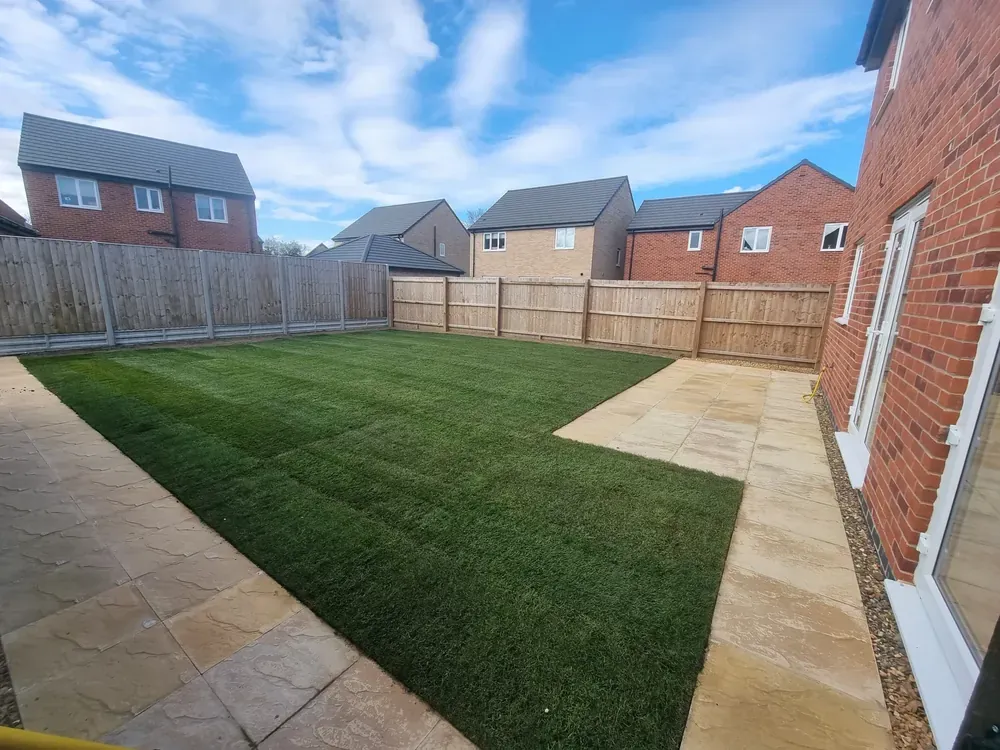
What a well built patio involves
A patio is the outdoor room you use most, so it needs to be flat enough for a table and chairs, dry enough to walk on in March, and the right size for how you actually live. Landscapers Norwich lays patios in Indian sandstone, porcelain and natural stone for houses across Norwich, from a small sitting area outside the back door to a terrace running the full width of the house.
Most of the work is underneath. The ground is dug out to make room for a compacted sub-base, the levels are set so the finished surface sits below the damp-proof course of the house, and the whole area is given a gentle fall so water runs off rather than pooling against the wall. Each slab is then bedded on a full bed of mortar rather than a few dabs, which is what stops slabs rocking, cracking or sinking at the corners over time.
A new patio suits homeowners who want an easy space to sit and eat outside, families replacing a tired concrete slab patio, and anyone pairing new paving with a new lawn. If the area is mainly for parking, block paving or a driveway build will usually be the better fit, because the base needs to carry far more weight.
What is included in a patio from us
Every patio quote spells out the work, so you can compare like with like.
- Site visit and measureWe check the levels, the damp-proof course, the drainage and how materials will get from the road to the garden.
- Dig-out and waste removalExcavation to the depth the patio needs, with the spoil taken away rather than left in a heap.
- Compacted sub-baseA layer of crushed stone, compacted in stages so the patio has a firm, even foundation.
- Full mortar bedEvery slab bedded on a full bed of mortar, set to line and level with a fall away from the house.
- Priming for porcelainPorcelain slabs are primed on the back before laying, so the low-porosity tile bonds to the bed.
- Pointing and jointingJoints filled with a mortar or jointing compound suited to the stone you have chosen.
- Edging and steps where neededEdges finished cleanly against lawn, beds or gravel, with steps where the levels change.
- Clean down and walk roundThe patio is cleaned off, the site left tidy, and we go over it with you before we leave.
Before you book
Things to think about before you book
-
Size and shape
Mark the area out with a hose or string and put your garden table on it. Most people find they want a little more room than they first thought, especially for chairs pulled back from a table.
-
Indian sandstone or porcelain
Indian sandstone has natural variation in colour and a riven or sawn finish. Porcelain is very consistent, low maintenance and resists staining, but it needs specialist cutting and priming. Seeing samples in daylight helps.
-
Levels against the house
The finished patio should sit at least two brick courses below the damp-proof course. If your garden is higher than the house, some digging out or a step down may be needed.
-
Where the water will go
A patio sheds a lot of rain. Think about whether it can run onto a lawn or bed, or whether a channel drain or soakaway is needed, especially on Norfolk clay.
-
Access for materials
Slabs, sand and stone usually come on a pallet or in bulk bags. Side access, a narrow gate or a long carry through the house all affect how the job is planned.
Good to know
Good to know about patios
- Natural stone varies
- No two Indian sandstone slabs are the same. Colour shifts between batches and within a pack, which is part of the character, so mixing slabs from several packs as you lay gives the most even look.
- Porcelain grip
- Outdoor porcelain is made with a textured surface for grip. Check that the range you like is rated for outdoor use, as indoor tiles can be slippery when wet.
- Sealing is optional
- Sandstone can be sealed to help it resist staining from leaves and barbecues. It changes the look slightly, so try a sample first. Porcelain does not need sealing.
- New patios need time
- Mortar needs to cure before heavy furniture or a barbecue goes on it, and before the joints are pressure washed. We will tell you when it is ready for full use.
How it works
How a patio job runs
-
Visit and choose
We visit, measure, check levels and talk through stone, size and layout. You get a free written quote.
-
Set out and dig
The patio is marked out, dug to depth and the spoil taken away, with care taken around beds and lawn.
-
Base and levels
The sub-base goes in and is compacted, and string lines set the finished height and the fall away from the house.
-
Lay and point
Slabs are bedded on mortar one by one, cut where needed, then the joints are pointed once the bed has firmed up.
-
Clean and hand over
We clean the patio down, clear the site and walk round it with you.
Which is better, Indian sandstone or porcelain?
Neither is better in every garden. Sandstone gives a softer, natural look and costs less to cut and lay; porcelain is more uniform, very easy to clean and resists staining. We bring samples so you can see both.
Do you lay patios on sand or mortar?
Slabs are laid on a full mortar bed over a compacted sub-base. A full bed supports the whole slab, which helps prevent rocking and cracking.
Will a patio make my garden flood?
It should not, if it is built with a fall and the water has somewhere to go. We plan where run-off will drain before we start, and add a channel drain where the ground will not take it.
Can you extend or replace an old patio?
Yes. We can lift a worn patio and lay a new one, or extend an existing one. Matching old stone is not always possible, so sometimes a border or a step is the neater way to join old and new.
Do I need planning permission for a patio?
A patio in a back garden does not usually need planning permission, as long as it is at or near ground level. Raised decks and terraces, and listed buildings, have their own rules, so check if either applies.
Can you lay the lawn as well?
Yes. Landscapers Norwich is run by James Steven Landscapes & Lawns, so turf around a new patio can be planned into the same job.
Other hard landscaping we do
- Block pavingBlock paved paths, patios and parking areas, laid on a compacted sub-base inside proper edge restraints.
- DrivewaysBlock paving, gravel and natural stone driveways, dug out and built up to carry a car for years.
- Garden paths and stepsPaths, steps and edging that link the house, the patio and the garden, set out so they are easy and safe underfoot.
Ready to plan your patio?
Send us the rough size and what you would like to use it for, and we will arrange a visit and a free quote.